Last Updated: April 2026 | Reviewed by Alex Hunter, Senior SaaS Editor
Ahrefs Review 2026: Still the Best Tool for Links and Content Discovery?
Ahrefs is the tool SEO people recommend when you ask, “What do I need to win?” Because at the end of the day, ranking is about two things: the content you publish and the authority behind it. Ahrefs is exceptionally strong at showing you why a competitor ranks and what you can realistically do to close the gap—especially when backlinks are a major factor in your niche.
In 2026, Ahrefs remains a power tool. It’s not a lightweight “keyword ideas” app. It’s an explorer: you use it to dissect competitors, discover topics that already perform, and build a link strategy grounded in reality.
Table of Contents
Quick Comparison: Ahrefs vs SEMrush
| Tool | Best For | Strength | Tradeoff |
|---|---|---|---|
| Ahrefs | Backlinks + content discovery | Link intelligence and explorer UX | Less suite breadth |
| SEMrush | All-in-one SEO operations | Keyword + competitive workflow depth | UI complexity + limits |
What Is Ahrefs?
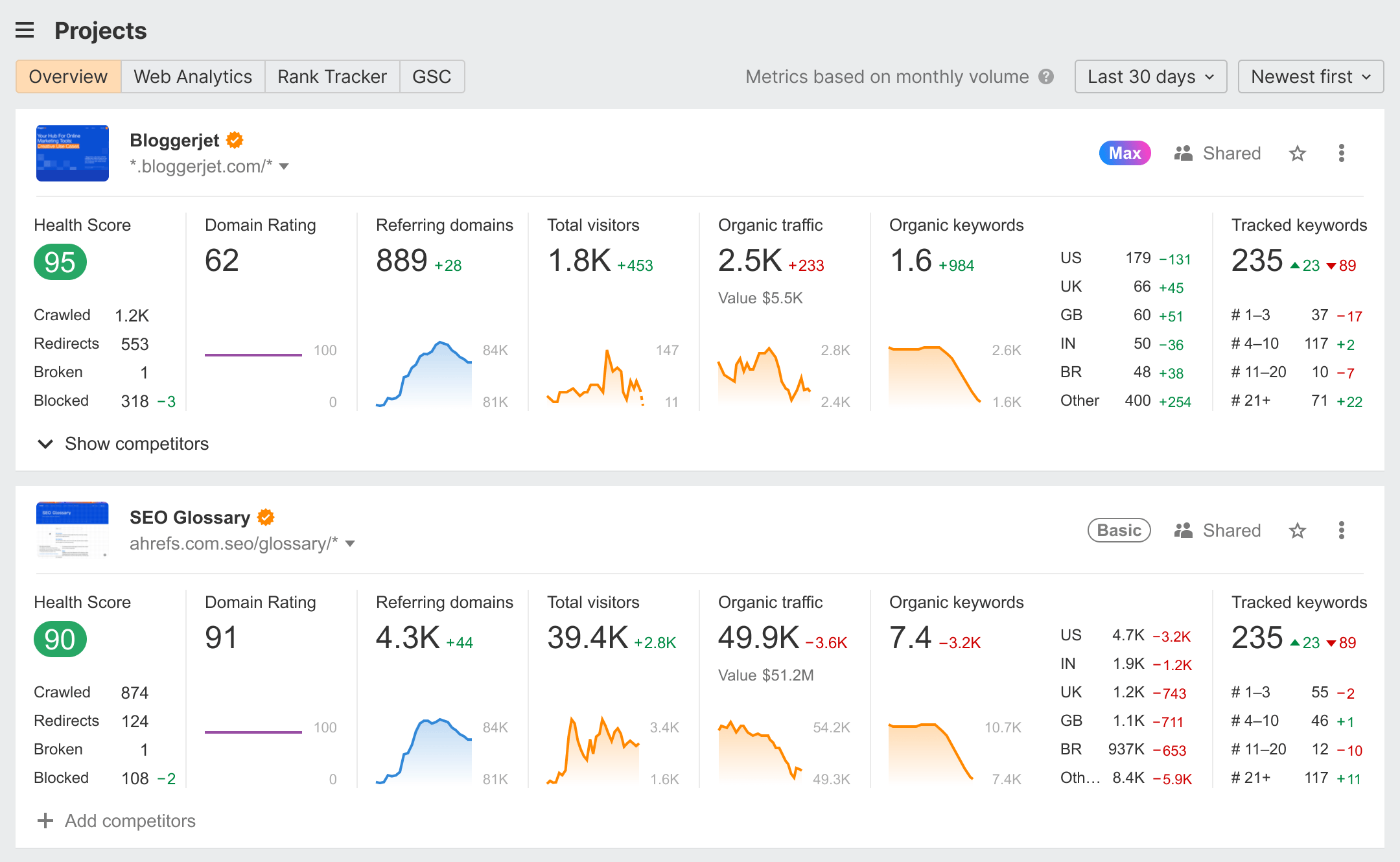
Ahrefs is an SEO platform with a strong focus on backlink intelligence and competitive analysis. The core use cases are:
- Backlink research: see what links point to your site and your competitors.
- Competitive discovery: identify which pages and topics drive traffic for other domains.
- Keyword research: validate targets and plan content around intent.
- Auditing: crawl your site to find technical/on-page issues.
If SEMrush is a toolkit for “running SEO,” Ahrefs is a microscope for “understanding why rankings happen.”
Backlink Analysis: The Reason People Buy Ahrefs
Backlink analysis is where Ahrefs feels best-in-class. The workflows that matter most:
- Link gap analysis: which domains link to your competitors but not you.
- Page-level link profiles: why a specific page outranks yours.
- New/lost links: monitoring momentum and churn.
- Anchor patterns: how competitors earn links (brand vs exact match vs “natural”).
For a SaaS review site, link gaps are especially useful: if your competitors get links from newsletters, directories, tools pages, or niche communities, Ahrefs helps you see those sources and build a realistic outreach plan.
Content Discovery: The Fastest Way to Stop Guessing
Ahrefs is excellent for answering: “What should we publish that has a chance to perform?” The strongest workflow is:
- Find competitor pages that already get traffic.
- Identify what makes them rank: coverage depth, structure, links, freshness.
- Ship a better version with clearer intent and stronger internal linking.
This approach beats “content brainstorming” because it is grounded in proven demand. In 2026, with SERPs getting more crowded, demand validation is a major advantage.
Keyword Research: Use Ahrefs for Validation, Not Just Ideas
Ahrefs can generate keyword ideas, but its best use is validation and prioritization:
- Intent: does the SERP reward informational content or product pages?
- Difficulty: do you have enough authority to compete?
- Topic potential: can you build a cluster (review + comparison + tutorial)?
If you already have a content pipeline, Ahrefs helps you pick battles you can win—and avoid wasting months targeting terms dominated by giants.
Site Audit & On-Page Tools
Ahrefs includes crawling and on-page checks. For many teams, it’s “sufficient” rather than “the reason you buy it.” The audit is useful for:
- broken links, redirects, and missing metadata,
- duplicate titles/descriptions,
- crawl issues and orphan pages,
- basic performance hygiene.
Teams that need deep technical SEO might pair Ahrefs with a dedicated crawler or performance tooling. But for most content-driven sites, the audit is a strong baseline.
Pricing & Limit Strategy
Ahrefs pricing is often shaped by usage limits: how many projects, crawls, tracked keywords, and users you need. The practical approach is to pick a plan based on how your team actually works:
- If you do heavy link research, prioritize higher limits for explorer usage and reporting/export.
- If you do ongoing audits, ensure crawl budget matches site size.
- If multiple teammates need access, factor in user seats early.
Who Ahrefs Is Best For
- Teams where backlinks matter (competitive niches, affiliate sites, B2B SEO).
- Content teams that want demand validation and competitor intelligence.
- Agencies doing competitor audits and link building strategy.
- Operators who want a clear view of “why we rank / why we don’t.”
Who Should Avoid It
- Teams that only need a simple keyword list tool.
- Organizations that won’t invest in link strategy and content execution.
- Very small sites that publish rarely (you may not use it enough).
Final Verdict
Ahrefs remains one of the best tools in SEO because it helps you see reality: which pages win, why they win, and what you need to change. If backlinks and competitive research are central to your growth strategy, Ahrefs is a top-tier buy. If you want broader suite coverage (PPC, more workflow tooling), SEMrush may be the better “single platform” decision.
Try Ahrefs →